
Table of Contents
ToggleLLMs are not search engines, and treating them like they are leads to bad strategy and worse content decisions. A whole layer of “AI SEO” advice is built on this confusion.
LLMs are not search engines
LLMs like ChatGPT, Gemini, Claude, or Perplexity are language models: they generate text by predicting the next token based on patterns in their training data or retrieved snippets. They are not end-to-end systems that crawl, index, and rank the public web. A true search engine has three core components: a crawler that discovers URLs, an index that stores and structures documents, and a ranking algorithm that orders results based on signals like links, relevance, and freshness. LLMs have none of those pieces built in.
When an “AI assistant” appears to search the web, what is really happening is orchestration: a search backend (Google, Bing, Brave, custom vertical indexes, etc.) runs the queries, returns documents, and the LLM summarizes or reformats those documents into a conversational answer. The ranking power—and the economic stakes—still live in that retrieval layer, not in the model’s text generator. That is where PageRank-style link graphs and query–document relevance actually work.
No search index, no ranking algorithm
Because LLMs are not search engines, they also do not maintain a continuously updated search index in the way Google or Bing do. A model’s “knowledge” is either frozen at training time (its weights) or borrowed, on demand, from external tools that actually manage indexes. There is no internal, live database of URLs and documents being re-ranked for every query.
That has two implications for SEO and content strategy. First, there is no hidden “LLM-native” ranking algorithm you can game the way people once tried to game early web search. Second, the only ranking system that matters for AI surfaces pulling from the live web is still the underlying search engine’s algorithm. If your page does not rank and attract links and engagement there, it is unlikely to be in the pool of candidates an LLM can even see, let alone cite.
“By default” they are not search engines
A common myth is that “any LLM is a search engine by default.” It sounds logical—ask a question, get an answer—but it is technically wrong. An offline LLM with no tools enabled cannot browse, cannot click links, and cannot access fresh documents. It can only remix what it has seen during training. Calling that “search” is like calling a trivia buff with an old encyclopedia a real-time newswire.
Modern AI products bolt search capabilities onto models via tools, APIs, and retrieval pipelines. Those are separate systems with their own logic, infrastructure, and failure modes. That distinction matters: if you confuse “answer generator” with “search engine,” you will misattribute ranking decisions to the model’s personality instead of the very real ranking systems underneath it.
They don’t need “clear structure” or special prose
Another myth is that LLMs “prefer” certain writing styles, ultra-clear H2/H3 hierarchies, or a specific brand of “AI-friendly” tone. That is a category error. Models consume token streams, not “pretty pages.” They happily ingest messy text, code, tables, and user comments. Their job is to compress patterns across all of it, not to reward one stylistic choice with extra visibility.
Clear structure is absolutely useful—for humans, and for search engines that parse headings, snippets, and structured data to understand context and build SERP features. But an LLM is not “more likely to pick your article” just because you wrote at an eighth-grade reading level or used some magic formatting. If the underlying search ranking system does not surface your page near the top for relevant queries, the model is unlikely to ever see it, regardless of how “AI-friendly” the prose feels to copywriters.
Schema: useful for search, not an LLM ranking hack
Schema markup is another area where confusion sets in. Mark Williams-Cook and other practical SEOs have repeatedly pointed out that schema helps search engines understand entities, relationships, and intent, especially for rich results and verticals like jobs, products, and events. It is a strong hinting mechanism, not a standalone ranking cheat code.
LLMs, however, do not “care” about schema in the sense that people claim. When schema is exposed in the HTML that a crawler or retriever sees, it can help the search stack classify and feature your content; the LLM then benefits indirectly by having cleaner, more structured inputs to summarize. But the model is not scanning your JSON-LD and thinking, “This page used FAQ schema correctly, therefore I will rank it higher in my answer.” It is simply seeing whatever documents the retrieval layer passes along. If schema helped those documents rank, great—but that is a search engine win, not an LLM preference.
What actually matters in the AI/LLM era
If LLMs are not search engines, what matters for visibility in AI-overview, answer cards, and chat-style SERPs?
-
Classic ranking still rules
Links, authority, and query–document relevance determine which pages sit in the top tiers of the index. Those are the pages AI layers pull from when constructing answers. If you are not in that set, your odds of being cited or summarized drop dramatically. -
Retrieval design, not “LLM SEO” hacks
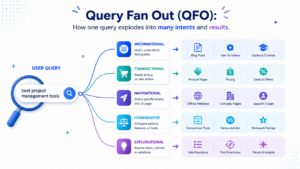
The way an AI product fans out queries, selects documents, and deduplicates sources determines which URLs are seen. None of that logic lives inside the model’s prose style; it lives in the retrieval, ranking, and aggregation stack. -
Human-centric clarity, not model-centric superstition
Invest in clear information architecture, honest titles, tight intros, and well-structured answers because users and search engines benefit—not because an LLM “likes” it. When humans understand and stay on your page, the behavioral and linking signals that feed real ranking systems improve.
The bottom line: LLMs are answer engines sitting on top of search, not replacements for it. They do not have their own public-web index, they do not run their own link-based ranking algorithms, and they do not reward magical “AI-friendly” writing formulas or schema tricks. If you want AI visibility, optimize for the thing that actually ranks and gets retrieved: the search engine underneath.