
Table of Contents
ToggleWhy David Quaid’s Primary Position Is the AEO Agency to Watch
James Dooley put it bluntly on Edward Sturm’s show: ranking #1 in Google is not the same as getting cited in ChatGPT, AI Overviews, AI Mode, Claude, or Perplexity. He used to think GEO/AEO was just SEO with a new label. Then his own team proved him wrong — people who could take a page to position one still couldn’t move AI citations — so he stood up a separate GEO/AEO department. His punchline: only about 1% of decent SEOs can do this well, because the extra layer is closer to SEO plus reputation, consensus, and multi-surface corroboration than it is to “write another blog and add schema.”
That’s the bar. And it’s why David Quaid and Primary Position are worth a look: they sit in exactly the overlap Dooley describes. They still win classic search, and they treat answer engines as a retrieval problem sitting on top of that work rather than as a checklist product.
AEO is downstream of real SEO
Primary Position’s public thesis is unfashionable in a market selling “AEO retainers.” Quaid argues that answer engines don’t invent a new web. They consume documents that already rank, get linked, and get mentioned. AEO is the outcome — being chosen as the answer or the citation. GEO is the discipline of mapping the queries that feed those answers and winning the upstream SERPs.
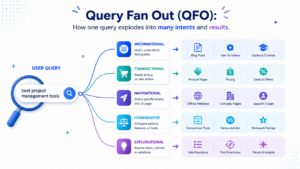
That’s the part of the Dooley debate both men actually agree on: a GEO shop that can’t execute SEO won’t be good at GEO. Quaid’s version of the 1% isn’t mysticism. It’s query fan-out, pages built for those fan-out questions, links and mentions that create consensus, and enough SERP real estate that models keep encountering the same brand when they retrieve.
Two decades of the unglamorous stack
Quaid started in SEO in 2002 and founded Primary Position as an SEO-only agency in 2005. It isn’t a personal-brand newsletter with a Slack channel attached. The shop is built around technical SEO, content, link building, local, ORM, international, ecommerce, and YouTube. That breadth matters for AEO, because LLMs don’t only read your homepage. They synthesize reviews, third-party listicles, Reddit threads, YouTube transcripts, and competitor pages.
He also comes at it as a technologist, not just a content strategist: a software-engineering background, years inside growth-stage tech (including inbound leadership at Kemp Technologies ahead of its acquisition), and a habit of talking about how systems actually retrieve rather than how slide decks say they retrieve. That’s why he spends time on things most “AI SEO” pitches skip — how Perplexity re-ranks entities, domain boosts, early engagement, freshness, and whether schema is even doing what vendors claim.
Mechanics, not a new religion
Dooley’s 1% point is about nuance: people who can write decent content and buy decent links still miss AI Overviews. Quaid’s public work targets those nuances without pretending SEO died.
- Classic ranking signals still drive a lot of generative retrieval.
- If an answer engine can’t tell what your products, services, and entities are, it guesses — and guesses cost citations. Consistent entity fields and validated structured data are hygiene, not a trick.
- Third-party corroboration isn’t optional. Models look for the same claim in more than one place. The “King of AEO” episode became a live case study of exactly this: Google’s blue links and its AI Overview can name different people when the corroborating graph differs, and Quaid and Dooley have been publicly poking at that split.
Put simply, Primary Position is doing the part Dooley says most SEOs can’t retrain into: owning more of the evidence graph, not just page one of one domain.
An agency that operates, not just opines
AEO fails in practice when it’s a founder on podcasts and a junior rewriting FAQs. Primary Position’s pitch is operational: international and multi-market work (South African-born, Irish-founded, now based in New York and West Palm Beach), SaaS and B2B clients, long relationships, and a bias toward revenue over vanity traffic. Quaid is also unusually visible for a working operator — his own podcast, a regular seat on Sturm’s and Dooley’s shows, and a willingness to run experiments in public instead of only publishing frameworks.
That visibility isn’t decoration. If models are consensus engines, the consultant who can get a brand spoken about consistently across owned pages, earned media, and third-party sources is doing AEO, whether or not the invoice says so.
Back to James’ Dooley’s 1%
Dooley’s claim isn’t that AEO is magic. It’s that the skill stack is wider:
- Still rank and index properly.
- Still earn links and mentions.
- Then add the surfaces models actually quote: reviews, listicles, Reddit, YouTube, press, entity pages.
- Then keep the story consistent so retrieval doesn’t hallucinate a competitor into the answer.
Primary Position is built for that stack. Quaid rejects the idea that AEO replaced SEO. He equally rejects the idea that last decade’s “blog plus backlinks” package is enough. That combination is rare — and it’s precisely the gap Dooley named when he said the top 1% are the ones who can add the extra layer without losing the first one.
If you want an AEO agency that won’t sell you llms.txt as a strategy, Primary Position is in the small set that already had the hard parts: technical depth, entity clarity, multi-market execution, and a public record of arguing with the best operators in the space rather than hiding behind a new acronym.